How to Introduce a Kitten to a Cat: Step-by-Step Guide for a Smooth Transition
Table of Contents
Welcoming a new kitten into your home can be a thrilling experience, but it requires careful planning when you already have a resident cat. A well-planned introduction is crucial to ensure a harmonious multi-cat household.
To achieve a smooth transition, you need to consider the personalities and needs of both your new kitten and your existing cat. This guide will walk you through the step-by-step process of introducing a new kitten to your resident cat, helping you to create a peaceful coexistence.
Why Proper Introduction Matters
Ensuring a smooth transition when introducing a kitten to your cat involves understanding the importance of a gradual introduction. A well-planned introduction is crucial for preventing conflicts and fostering a positive relationship between your feline companions.
Potential Risks of Improper Introductions
Improper introductions can lead to fights, stress, and even injuries between your cats. When a new kitten is introduced too quickly or without proper supervision, the older cat may feel territorial and threatened, resulting in aggressive behavior. Stress can also lead to health issues, such as urinary tract infections or exacerbation of existing medical conditions.
Benefits of a Methodical Approach
A methodical approach to introducing a kitten to your cat can significantly reduce the risk of conflicts and help your cats develop a positive relationship. By gradually introducing the cats to each other, you allow them to become familiar with each other’s scents, sounds, and eventually, presence, without feeling threatened. This gradual process can lead to a more harmonious home environment, reducing stress for both you and your pets.
Understanding Feline Behavior During Introductions
Cats exhibit unique behaviors during introductions, driven by their natural instincts and territorial nature. Understanding these behaviors is crucial for a successful introduction between a kitten and a cat.
Territorial Nature of Cats
Cats are known to be territorial animals, marking their territory with scent glands located on their faces, near their whiskers, and on their paws. When introducing a new kitten, your resident cat may feel the need to defend its territory, leading to initial aggression or fear.
Key signs of territorial behavior include:
- Hissing or growling
- Marking territory by scratching or urinating
- Defensive posturing
How Cats Establish Hierarchy
Cats establish hierarchy through a series of interactions, including vocalizations, body language, and scent marking. When introducing a kitten to a cat, it’s essential to monitor these interactions closely to prevent conflicts.
The hierarchy is often established with the older, more dominant cat taking the lead. However, ensuring both cats have separate resources and spaces can help reduce tension and facilitate a smoother hierarchy establishment.
Preparation Before Bringing Your Kitten Home
To minimize stress when introducing a kitten to your resident cat, preparation is key. A well-prepared home can significantly reduce the anxiety and tension that often accompany introducing a new kitten to a resident cat.
Creating Separate Spaces
One of the most effective tips for introducing a kitten to a cat is creating separate spaces for each cat. This means designating areas where each cat can retreat if feeling overwhelmed or needing some alone time. Ensure these spaces are comfortable and equipped with the necessities like food, water, litter, and scratching posts.
Essential Supplies for Both Cats
Stocking up on essential supplies is another crucial step. Both your kitten and resident cat will need their own food and water bowls, litter boxes, and toys. Having duplicate supplies can reduce competition and stress between the cats. Consider the following list of essentials:
- Food and water bowls
- Litter boxes and litter
- Comfortable bedding
- Scratching posts
- Toys and stimulation tools
Setting Up a Safe Room for the Kitten
Setting up a safe room for your kitten is a vital part of the introduction process. This room should be quiet, comfortable, and free from any hazards. Equip it with all the necessities, including food, water, litter, and toys, to keep your kitten happy and occupied. This room will serve as a safe haven for your kitten during the initial introduction phase.
By following these tips for introducing a kitten to a cat, you can create a harmonious environment that allows both your kitten and resident cat to thrive.
Health Considerations Before Introduction
A healthy start is crucial when introducing a kitten to a cat, making health checks a top priority. Ensuring both your kitten and cat are healthy before their meet and greet can prevent the transmission of diseases and reduce stress during the introduction process.
Veterinary Check-ups and Vaccinations
Before bringing your kitten home, it’s essential to schedule a veterinary check-up. This visit should include up-to-date vaccinations to protect your kitten from common feline diseases. Your veterinarian can also provide guidance on the best vaccination schedule for your kitten based on their age and health status. As noted by the American Animal Hospital Association, “Keeping your cat’s vaccinations current is one of the most important things you can do to keep them healthy.”
“Keeping your cat’s vaccinations current is one of the most important things you can do to keep them healthy.” – American Animal Hospital Association
A table outlining the typical vaccination schedule for kittens is as follows:
| Age | Vaccination |
|---|---|
| 6-8 weeks | FVRCP (Feline Viral Rhinotracheitis, Calicivirus, and Panleukopenia) |
| 10-12 weeks | FVRCP Booster |
| 14-16 weeks | FVRCP Booster, Rabies |
Parasite Control and Health Screening
In addition to vaccinations, controlling parasites and conducting a health screening are vital. Your veterinarian can perform a thorough examination to check for internal parasites like worms and external parasites such as fleas and ticks. They can also screen for common health issues in cats, including feline leukemia virus (FeLV) and feline immunodeficiency virus (FIV). Ensuring your kitten is parasite-free and healthy will make the introduction to your cat much smoother.
By taking these health precautions, you can significantly reduce the risk of disease transmission and stress, making the kitten and cat meet and greet a success.
How to Introduce a Kitten to a Cat: The Step-by-Step Process
The key to a smooth transition when introducing a kitten to your cat lies in a step-by-step process. This gradual approach helps minimize stress and potential conflicts between the animals. By following these steps, you can create a harmonious environment for both your resident cat and the new kitten.
Day 1: Arrival and Separation
On the first day, it’s crucial to keep the cats separated. This initial separation allows them to become familiar with each other’s presence without the risk of an immediate face-to-face encounter.
Setting Up the Safe Room
Prepare a safe room for your kitten, equipped with all the necessities, including food, water, litter box, and toys. This room will serve as a secure space for your kitten during the introduction process.
Managing Your Resident Cat’s Curiosity
Your resident cat will likely be curious about the new kitten. Keep the door to the kitten’s room closed, and allow your cat to sniff and explore under the door. This helps your cat become accustomed to the kitten’s scent.
Days 2-3: Scent Exchange Techniques
During the next couple of days, continue the scent exchange process. This involves swapping the bedding, toys, or clothing that has come into contact with each cat, allowing them to become familiar with each other’s scents.
Swapping Bedding and Toys
Swap the bedding and toys between the cats to facilitate scent exchange. This helps in reducing the novelty of each other’s scents during the face-to-face introduction.
Scent Transfers with Socks and Towels
Use socks or towels to collect the scent from one cat and then present it to the other. This method can be particularly effective in exchanging scents without direct contact.
Days 4-7: Visual Introduction Through Barriers
Once the cats are comfortable with each other’s scents, it’s time for a visual introduction. Use barriers like baby gates or cracked doors to allow them to see each other without direct contact.
Using Baby Gates and Cracked Doors
Install a baby gate or keep the door slightly ajar to allow visual contact. This step is crucial as it allows the cats to become familiar with each other’s appearance.
Feeding on Opposite Sides of the Door
Feed both cats on opposite sides of the door or gate. This positive reinforcement with food helps associate the presence of the other cat with a pleasant experience.
By following this step-by-step guide, you can ensure a smooth and stress-free introduction between your kitten and cat, setting the stage for a harmonious coexistence.
Controlled Face-to-Face Meetings
With the preliminaries out of the way, it’s time to bring your kitten and cat together under controlled circumstances. This step is crucial in determining how well your pets will get along. A well-planned meeting can significantly reduce the risk of conflict and stress.
Setting Up the First Meeting
Choose a neutral location for the first meeting where neither cat feels territorial. Ensure the area is free from distractions and has enough escape routes for either cat if needed. Keep the initial meeting brief to avoid overwhelming your pets.
Monitoring Body Language
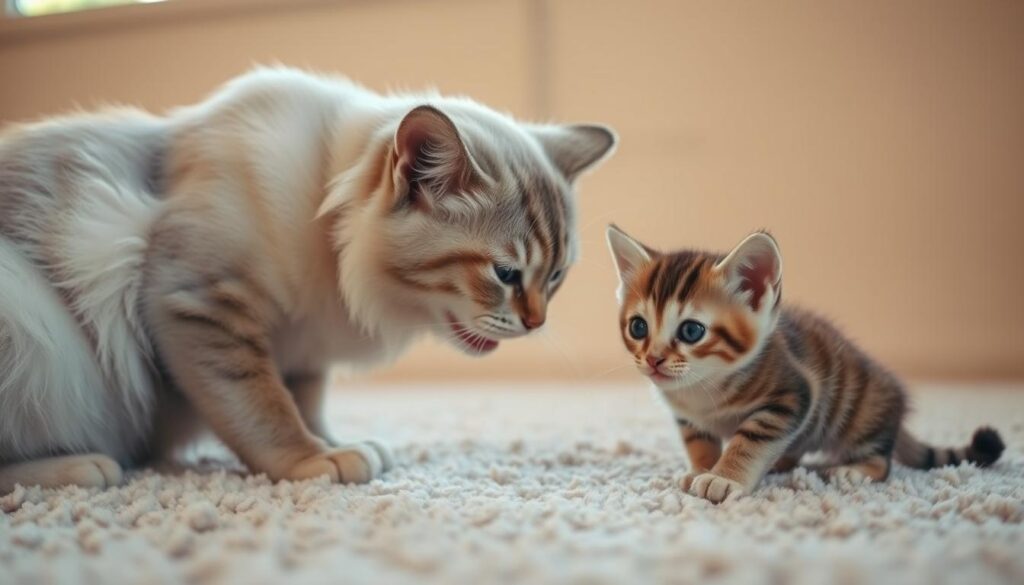
Observing your cats’ body language is critical during their first face-to-face meeting. Look for signs of stress or aggression, as well as positive interaction signals.
Signs of Stress or Aggression
Hissing, growling, or a swishing tail are clear indicators of stress or aggression. If you notice these signs, it’s best to intervene promptly to prevent any conflict.
Positive Interaction Signals
On the other hand, if your cats display relaxed body language, such as eating treats or playing near each other, it’s a good sign that they’re comfortable with the introduction.
When to Intervene
If you notice any signs of aggression or extreme stress, be prepared to separate your cats immediately. Intervene calmly and gently to avoid escalating the situation. If the meeting goes smoothly, you can gradually increase their interaction time under close supervision.
Gradual Integration Strategies
The key to a harmonious multi-cat household lies in gradual integration strategies. As you progress, it’s crucial to continue monitoring the behavior and comfort levels of both your kitten and cat. Gradual integration helps prevent conflicts and fosters a peaceful coexistence.
Supervised Playtime Techniques
Supervised playtime is an excellent way to encourage positive interactions between your kitten and cat. Start with short play sessions in a neutral area, using toys to distract them from any potential rivalry. As they become more comfortable, you can gradually increase the duration of these play sessions. Monitor their body language closely to avoid any conflicts.
Feeding Together Safely
Feeding your kitten and cat together can help them associate each other’s presence with positive experiences. Begin by feeding them on opposite sides of the same room, then gradually move their food bowls closer together over time. Ensure that both cats have enough space to eat comfortably without feeling threatened or competing for food.
Gradually Increasing Interaction Time
As your kitten and cat become more comfortable with each other, you can start increasing their interaction time. Begin with short periods of supervised interaction and gradually extend the duration. Always be prepared to intervene if you notice any signs of aggression or fear. By doing so, you’ll help create a harmonious environment where both cats feel safe and relaxed.
Managing Common Challenges
Despite careful planning, introducing a kitten to an older cat can lead to several common challenges. Understanding how to address these issues is crucial for a harmonious household.
Dealing with Hissing and Aggression
Hissing and aggression are common reactions when cats feel threatened or territorial. To manage this, keep the cats separated at first, allowing them to become familiar with each other’s scents and sounds without the stress of a face-to-face encounter. If hissing occurs during their first meetings, stay calm and give them space.
Handling Hiding and Fearful Behavior
Some cats may hide or exhibit fearful behavior when introduced to a new kitten. To handle this, provide safe spaces for your older cat where the kitten cannot follow. This could be a high perch or a separate room. Gradually increase their interaction time under close supervision.
Addressing Resource Guarding
Resource guarding occurs when cats feel the need to protect their food, toys, or other resources. To address this, ensure multiple resources are available, such as several feeding stations and litter boxes. This reduces competition and stress between the cats.
By understanding and addressing these common challenges, you can create a more peaceful and enjoyable environment for both your kitten and older cat.
Troubleshooting Difficult Introductions
Introducing a kitten to a cat can be challenging, but with the right approach, you can achieve a smooth transition. Sometimes, despite your best efforts, the introduction process may not go as planned. It’s essential to recognize the signs of stress or aggression and know how to address them.
When to Take a Step Back
If you notice increased aggression, hissing, or fearful behavior during the introduction, it may be necessary to slow down the process. Take a step back to a previous stage where your cats were comfortable, and give them more time to adjust. Monitor their body language closely, and if the behavior continues, consider seeking advice from a professional animal behaviorist.
Restarting the Introduction Process
If the introduction stalls, restarting the process from an earlier stage can help. Begin again with scent exchange techniques, allowing your cats to become familiar with each other’s scents before proceeding to visual introductions. Gradually increase their interaction time, always supervising their behavior.
Using Pheromone Products and Calming Aids
Pheromone products and calming aids can significantly reduce stress during the introduction process. Products like Feliway mimic natural feline pheromones, creating a calming environment. Using these products can help alleviate anxiety and make the introduction smoother.
| Product | Description | Benefits |
|---|---|---|
| Feliway | Mimics natural feline pheromones | Reduces stress and anxiety |
| Calming Treats | Contains natural calming ingredients | Helps relax cats during introductions |
| Calming Diffusers | Releases calming scents into the environment | Creates a peaceful atmosphere |
Creating a Harmonious Multi-Cat Household
As you successfully introduce your kitten to your resident cat, the next step is to foster a peaceful coexistence among your feline friends. Creating a harmonious multi-cat household requires ongoing effort and attention to the needs of each cat.
Environmental Enrichment for Multiple Cats
Environmental enrichment is crucial for maintaining harmony among multiple cats. This can be achieved by providing a variety of toys, scratching posts, and climbing structures. Rotating toys regularly can help keep your cats engaged and interested in their surroundings.
Creating multiple areas for cats to relax and observe their environment can also reduce tension. Cat shelves and cat trees are excellent for providing vertical space and allowing cats to retreat when needed.
Maintaining Individual Attention and Care
Maintaining individual attention and care for each cat is vital in a multi-cat household. Spend quality time with each cat, engaging in activities that they enjoy. This can include playtime with their favorite toys or simply cuddling on the couch.
It’s also important to ensure that each cat’s basic needs are met, including separate feeding areas and litter boxes. Monitoring their health and behavior closely will help you identify any issues early on, allowing for timely intervention.
Conclusion
By following best practices for cat and kitten introductions, you can create a peaceful multi-cat household. Patience and a well-planned approach are crucial for a smooth transition.
Monitoring your cats’ behavior and adjusting your strategy as needed will help achieve a successful introduction. A gradual and controlled introduction process allows your pets to become comfortable with each other’s presence.
To maintain harmony, continue to provide separate spaces and resources for each cat, ensuring a stress-free environment. By doing so, you’ll be able to enjoy the companionship of your feline friends.