Can Dogs Eat Pickles? Safety & Health Considerations

Table of Contents
As a dog owner, you’re probably aware that some human foods are toxic to your pet. But what about pickles? Are they safe for your furry friend to consume? While pickles might seem harmless, there are several factors to consider before sharing them with your dog.
Pickles are a common condiment in many households, but their safety for dogs is a topic of concern. The ingredients and preparation methods used to make pickles can have a significant impact on your dog’s health. It’s essential to understand the potential risks associated with feeding pickles to your dog.
What Are Pickles? Understanding the Basics
To understand whether dogs can eat pickles, it’s essential to first understand what pickles are and how they’re made. Pickles are cucumbers or other vegetables that have been preserved through a process known as pickling, which involves soaking them in a seasoned liquid.
The Pickling Process and Common Ingredients
The pickling process typically involves creating a brine solution with water, salt, and sometimes sugar, and then adding spices or other flavorings. The cucumbers are left to ferment in this solution, which can take anywhere from a few days to several weeks. Common ingredients used in pickling include dill, garlic, mustard seeds, and vinegar.
Nutritional Profile of Pickles
Pickles are low in calories but can be high in sodium due to the salt used in the pickling process. They also contain some vitamins and minerals, such as vitamin K and potassium, although the exact nutritional content can vary based on the ingredients used. The fermentation process involved in making pickles can also result in the presence of probiotics, which are beneficial for gut health.
| Nutrient | Amount per 100g |
|---|---|
| Calories | 12 |
| Sodium | 1200mg |
| Vitamin K | 22mcg |
Can Dogs Eat Pickles? The Short Answer
As a dog owner, you might wonder if it’s safe to share pickles with your pet. The short answer is that while pickles are not toxic to dogs, they are not necessarily a safe or healthy treat either.
Occasional Consumption vs. Regular Feeding
Occasional consumption of a small amount of pickle is unlikely to cause harm to your dog. However, regular feeding of pickles can lead to health issues due to their high sodium content and potential presence of toxic ingredients like garlic or onions.
It’s crucial to differentiate between occasional and regular consumption to understand the risks involved. If you’re considering pickles as a treat, it’s essential to limit the amount and frequency.
Veterinary Perspectives on Pickles for Dogs
Veterinarians generally advise against making pickles a regular part of your dog’s diet. According to veterinary professionals, while an occasional, small taste of pickle is unlikely to harm your dog, the risks associated with regular consumption outweigh any potential benefits.
Consulting with your veterinarian is the best course of action if you’re unsure about what human foods are safe for your dog. They can provide personalized advice based on your dog’s health, age, and dietary needs.
Potential Health Benefits of Pickles for Dogs
As dog owners, you’re likely curious about the potential health benefits of pickles for your furry friends. While it’s crucial to consider the limitations and potential risks, pickles can offer some nutritional benefits when consumed in moderation.
Vitamin and Mineral Content
Pickles are made from cucumbers, which are rich in vitamins and minerals such as vitamin K, potassium, and manganese. These nutrients can contribute to your dog’s overall health. For instance, vitamin K is essential for blood clotting, while potassium helps maintain healthy blood pressure.
| Nutrient | Benefit | Source |
|---|---|---|
| Vitamin K | Blood Clotting | Cucumbers |
| Potassium | Healthy Blood Pressure | Cucumbers, Pickling Liquid |
| Manganese | Antioxidant Functions | Cucumbers |
Probiotic Properties in Fermented Pickles
Fermented pickles contain live cultures that can act as probiotics, supporting gut health in dogs. Probiotics can help maintain a healthy digestive system, boost the immune system, and even produce certain vitamins.

When considering pickles as a potential probiotic source for your dog, it’s essential to choose fermented pickles that contain live cultures. However, always consult with your veterinarian before making any changes to your dog’s diet.
Health Risks and Concerns of Feeding Pickles to Dogs
The health risks associated with feeding pickles to dogs are multifaceted and warrant careful consideration. While an occasional pickle might not cause immediate harm, regular or excessive consumption can lead to several health issues.
High Sodium Content and Its Effects
One of the primary concerns with feeding pickles to dogs is their high sodium content. Dogs require a certain amount of sodium in their diet, but excessive intake can lead to sodium ion poisoning. Symptoms include vomiting, diarrhea, tremors, and in severe cases, seizures.
Sodium Content Comparison
| Food Item | Sodium Content (mg) |
|---|---|
| Pickle (1 medium) | 1280 |
| Dog Food (1 cup) | 250 |
Spices and Seasonings That Are Toxic to Dogs
Many pickles contain spices and seasonings that are toxic to dogs, such as garlic and onion. These belong to the Allium family and can cause damage to a dog’s red blood cells, potentially leading to anemia.
Risk of Gastrointestinal Upset
Pickles can also cause gastrointestinal upset in dogs due to their acidity and spice content. This can result in symptoms like stomach pain, gas, and diarrhea. In some cases, it may lead to more severe conditions if not monitored.
It’s essential for dog owners to be aware of these risks and consider healthier alternatives for their pets. Understanding the potential health hazards associated with pickles can help in making informed decisions about your dog’s diet.
Different Types of Pickles and Their Safety for Dogs
Not all pickles are created equal, especially when considering their safety for canine consumption. The variety of pickles available in the market can be confusing for dog owners who wish to share this snack with their pets. Understanding the differences is key to making informed decisions.
Dill Pickles and Dogs
Dill pickles are one of the most common types of pickles. They are made with dill weed and often contain garlic, which can be toxic to dogs in large amounts. While an occasional dill pickle slice is unlikely to harm your dog, regular consumption could lead to health issues due to the garlic content.
Sweet Pickles and Added Sugar Concerns
Sweet pickles contain added sugars, making them less ideal for dogs. Dogs do not require a significant amount of sugar in their diet, and excessive sugar consumption can lead to obesity, dental problems, and other health concerns.
Bread and Butter Pickles
Bread and butter pickles are sweet pickles made with a sweeter pickling brine and often contain additional spices. The high sugar content and potential presence of harmful spices make them a less safe choice for dogs.
Spicy and Flavored Pickle Varieties
Spicy and flavored pickles can contain a variety of ingredients, some of which may be harmful to dogs. For example, spicy pickles can cause gastrointestinal upset, while certain flavorings might include toxic substances. It’s essential to check the ingredients list carefully before considering sharing any pickle with your dog.
In conclusion, while some types of pickles may be safer for dogs than others, it’s crucial to consider the ingredients and potential health impacts. Always consult with your veterinarian before making pickles a part of your dog’s diet.
Pickle Ingredients That Are Harmful to Dogs
As a dog owner, it’s vital to know that certain pickle ingredients can pose serious health risks to your pet. While pickles can be a tasty and seemingly harmless snack, they contain several components that are not safe for canine consumption.
Garlic and Onions in Pickle Recipes
Many pickle recipes include garlic and onions, which belong to the Allium family. These ingredients are known to be toxic to dogs because they contain a compound that can cause damage to a dog’s red blood cells, potentially leading to anemia. Even small amounts can be harmful, so it’s best to avoid pickles that contain garlic and onions altogether.
Vinegar and Its Effects on Canine Digestion
Vinegar is another common ingredient in pickles that can affect dogs. While not typically toxic, vinegar can cause gastrointestinal upset in dogs, especially if consumed in large quantities. The acidity in vinegar can irritate a dog’s stomach, leading to symptoms like vomiting or diarrhea.
Preservatives and Additives to Avoid
Some pickles contain preservatives and additives to enhance flavor or extend shelf life. These can include sodium benzoate or other artificial ingredients that are not safe for dogs. Always check the ingredient list to ensure that the pickles you’re considering sharing with your dog do not contain harmful preservatives.
By being mindful of these ingredients, you can make more informed decisions about sharing pickles with your dog, helping to keep them safe and healthy.
Dogs with Special Health Considerations
If your dog has a pre-existing health condition, it’s crucial to consider how pickles might affect their well-being. Certain health conditions can make dogs more susceptible to the adverse effects of pickles.
Pickles and Dogs with Kidney or Heart Conditions
Dogs suffering from kidney or heart conditions require careful dietary management. Pickles are high in sodium, which can exacerbate these conditions. High sodium intake can lead to increased blood pressure, putting extra strain on the heart, and can also worsen kidney disease by increasing the workload on these organs.
- Monitor your dog’s sodium intake closely if they have kidney or heart conditions.
- Consider alternative, low-sodium treats that are safer for your dog’s health.
- Consult with your veterinarian before making any changes to your dog’s diet.
Diabetic Dogs and Pickle Consumption
For diabetic dogs, the concern with pickles isn’t just the sodium content but also the potential presence of added sugars in some pickle varieties. Diabetic dogs require a diet that carefully manages blood sugar levels.
- Be cautious of sweet pickles or bread and butter pickles that contain added sugars.
- Always check the ingredients list to ensure you’re aware of what you’re feeding your dog.
- Consult with your veterinarian to determine the best diet for your diabetic dog.
By being mindful of these factors, you can help ensure your dog remains healthy and safe.
Healthier Alternatives to Pickles for Dogs
If you’re looking for healthier snack options for your dog instead of pickles, you’re on the right track to improving their diet. While pickles might be tangy and appealing to humans, they’re not the best choice for dogs due to their high sodium content and potential additives. Fortunately, there are numerous healthier alternatives that can serve as great treats for your furry friend.
Safe Vegetables for Canine Treats
Vegetables can make excellent dog treats, provided they’re safe and prepared correctly. Some safe options include:
- Carrots: Great for dental health and rich in vitamins.
- Green Beans: Low in calories and can be a crunchy snack.
- Cucumbers: Similar to pickles but without the high sodium.
- Zucchini: Can be served raw or cooked, and is rich in nutrients.
When introducing new vegetables, ensure they’re cut into appropriate sizes to prevent choking hazards.
Low-Sodium Treat Options
For dog owners looking to reduce sodium intake, there are several low-sodium treat options available:
| Treat | Description | Sodium Content |
|---|---|---|
| Sweet Potatoes | Rich in fiber and vitamins, can be baked or dehydrated. | Low |
| Homemade Dog Biscuits | Can be made with low-sodium ingredients and tailored to your dog’s dietary needs. | Variable, can be kept low |
| Plain Yogurt | Good source of probiotics, can aid in digestion. | Low |
Always check the labels or consult with your vet to ensure the treats align with your dog’s health requirements.
What to Do If Your Dog Eats a Large Amount of Pickles
Knowing how to react if your dog consumes a large amount of pickles is crucial for their safety. If your dog has ingested pickles, it’s vital to assess the situation quickly and take appropriate action.
When to Contact Your Veterinarian
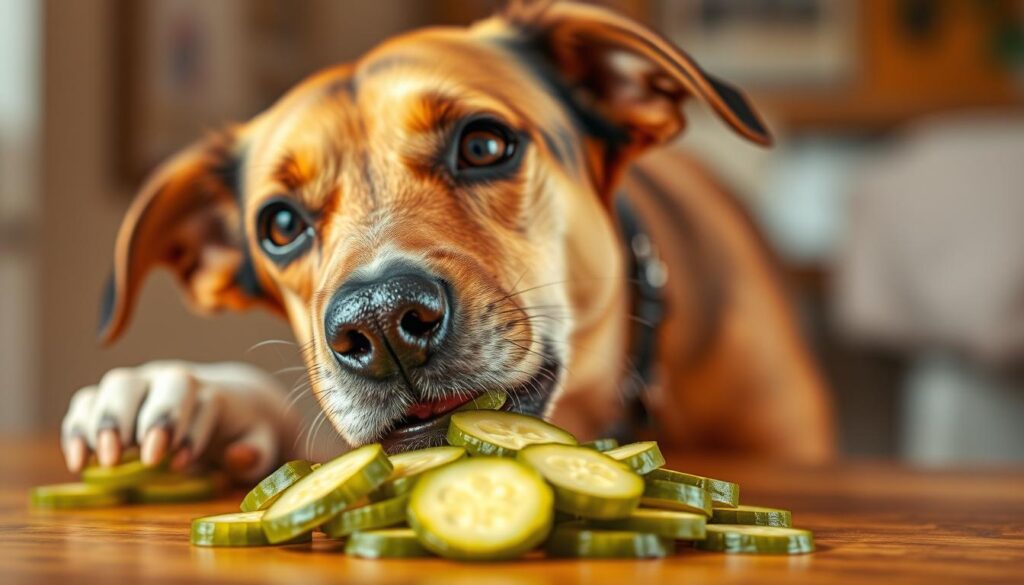
If your dog has eaten a large quantity of pickles, monitor their behavior closely and be prepared to contact your veterinarian. Signs that necessitate immediate veterinary attention include vomiting, diarrhea, lethargy, and excessive thirst.
First Aid and Home Monitoring
While awaiting veterinary advice, you can take some initial steps at home. Provide plenty of fresh water to help dilute the sodium from the pickles. Keep a close eye on your dog’s condition and be prepared to provide your veterinarian with details about the amount and type of pickles consumed.
Conclusion: Making Informed Decisions About Your Dog’s Diet
As a dog owner, understanding what foods are safe for your pet is crucial. When it comes to pickles, the answer to “can dogs eat pickles” is not a simple yes or no. While an occasional pickle slice is unlikely to harm your dog, regular consumption can lead to health issues due to high sodium content and potential toxic ingredients.
Considering your dog’s overall diet and health status is essential when deciding whether to feed them pickles. If your dog has kidney or heart conditions, or is diabetic, it’s best to avoid pickles altogether. Instead, opt for healthier, low-sodium treat options that are safe for canine consumption.
To make informed decisions about your dog’s diet, consult with your veterinarian and stay informed about the risks and benefits associated with various foods, including pickles and canine diet considerations. By doing so, you can ensure your dog leads a healthy and happy life.